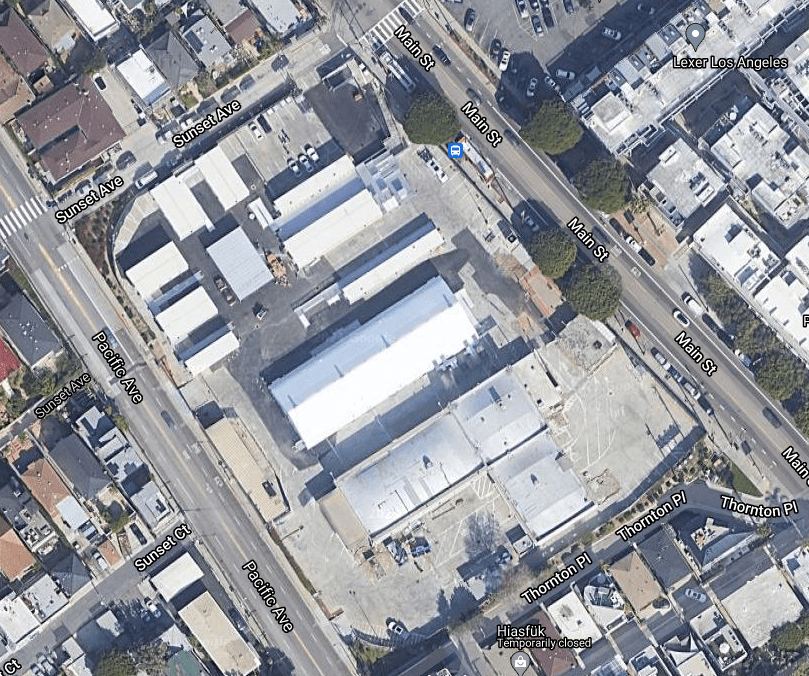
A Bridge Home has helped temporarily house over 230 unhoused people since it opened on February 25, 2020. Of these, about 45 people have transitioned to stable circumstances including permanent housing, family reunifications, self-discharges to live with roommates, and supportive care. Tragically, one resident of the home died of natural causes. We need more solutions like this Bridge Home on the west side of Los Angeles. This is one of many solutions being explored by City Council to address a decades-long issue of increasing homelessness throughout the City.
The housing structure was originally opened with 154 beds in a much-needed area of Venice. Of those, 100 were for adults and 54 for transition-age youth. Since the start of the pandemic, the capacity was reduced to 127 beds with a similar distribution. There have been claims by many opponents that “the bridge housing is not fully occupied“. The home is typically filled to capacity and runs anywhere from 95 to 100% capacity. The distribution of the period of occupancy is bimodal with residents staying either fewer than 30 days or more than 6 months.
The Bridge Home program is not simply a cot and 3 squares. It is an integrated program meant as a piece of the pipeline to flow those living on the streets or in our camps and on the beach into a variety of housing solutions. The Venice Bridge Home is operated by PATH and by Safe Place for Youth. The individuals are matched to the shelter by LAHSA working in partnership with the St. Joseph Center. The Bridge Home is in partnership with a variety of organizations as diverse as Venice Family Clinic, Pals and Pets (veterinary and pet training and care services), The Book Foundation (donated books and running of book clubs for residents), and USA Table Tennis (a certified instructor provided lessons to residents on several occasions early in the pandemic).
Well If It’s So Good, Why So Many Homeless Still on the Streets?
While in any other part of Los Angeles, it would seem that providing housing for that many should make a significant dent on the number of homeless forced to live on the street, subsist on scarce food and remain without health care and other services. Unfortunately, Venice’s long standing homeless problem represents a much greater challenge than housing 125 adults and children. In 2019, there were an estimated 1,100 homeless living in Venice. At best, the home could house 10% of those living on the boardwalk, in alleys and in vacant lots. Venice, like most other communities in Los Angeles, needs 10 Bridge Homes. Unfortunately there is so much resistance to solutions offered by the City that progress is very slow. Obviously A Bridge Home is not the solution for every person living unhoused, but it’s part of a system of systems seeking to end our homeless crisis.
Bonin’s Programs are Causing Homelessness to Flourish
While the data is imperfect and incomplete, here’s a look at the increase in homeless in Los Angeles and CD 11 since 2013. While LA’s homeless population has continuously grown significantly year over year (other than a slight drop in 2018), the homeless population in CD 11 has not increased nearly as much. There was a significant increase in the number of unhoused from 2013 to 2015 but this increase can hardly be blamed on the policies of then recently elected Mike Bonin. From 2015 to 2019, the population of homeless in CD 11 has hovered around 2,500 with the latest count in 2019 recording 2,339.
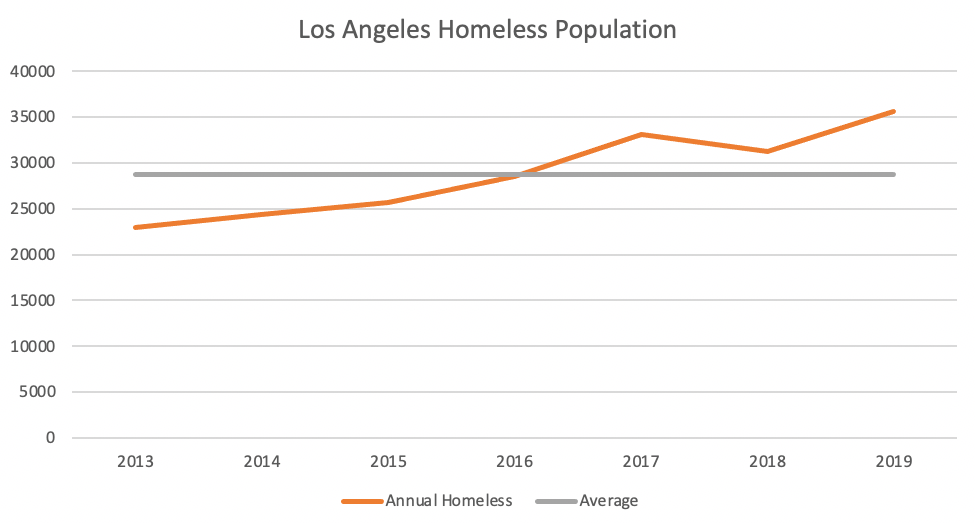
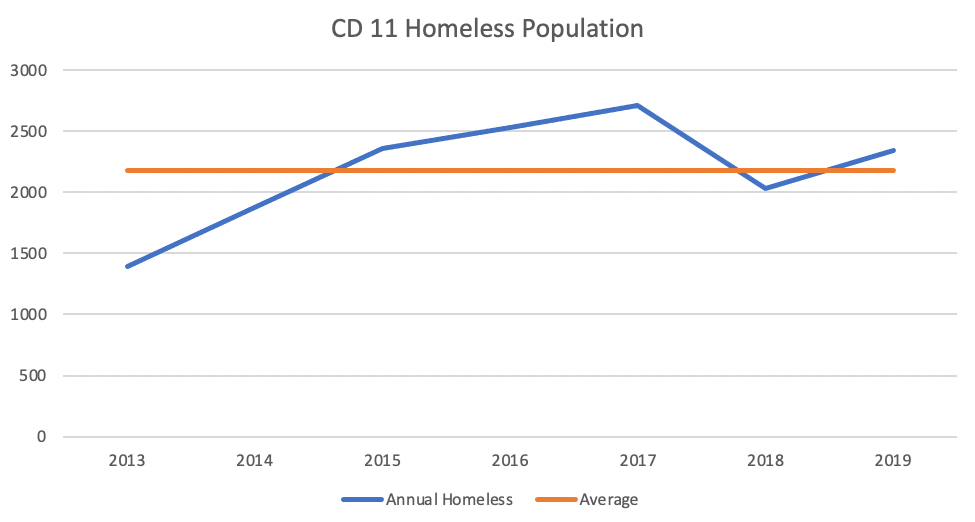
This data is from the Los Angeles Homeless Services Authority’s (LAHSA) annual homeless counts. This information raises two questions I don’t have an answer to:
- Why did all of Los Angeles appear to have reduced its unhoused people from 2017 to 2019 by roughly 6%. Is this a difference in counting methods or a true reduction?
- Why did CD 11 experience such a dramatic increase in homelessness from 2013 to 2015 (70%)? Was there a massive displacement from neighboring El Segundo or other council districts, did nearly 1,000 new people become homeless in CD 11, or was teh count from 2013 underreported?
Bonin has Failed on His Promises to Venice
Originally proposed in 2018, Council District 11’s Mike Bonin engaged the Venice community with a proposal to acquire the 3 acre facility and build shelter for over 100 homeless. The former transit hub made a lot of sense; it was already fenced in to provide security for the home’s residents, it was large enough to allow for an impactful number of beds along with showers and other supporting services, and it did not require any major construction. Finally, at a cost of only a few million dollars, it was one of the cheapest solutions offered to date. Unfortunately, the community resisted and put up obstacles for nearly 2 years, resulting in 150 people having to continue to sleep on the streets without any care or shelter. Thankfully, they now have protection from the elements and a safe place to rest and protect their belongings.
As part of the Council Motion that established A Bridge Home, the City established the “Special Enforcement and Cleaning Zone“. This is a roughly 2 square mile area surrounding the home’s property that receives special camping and law enforcement attention as well as City-provided sanitation services.
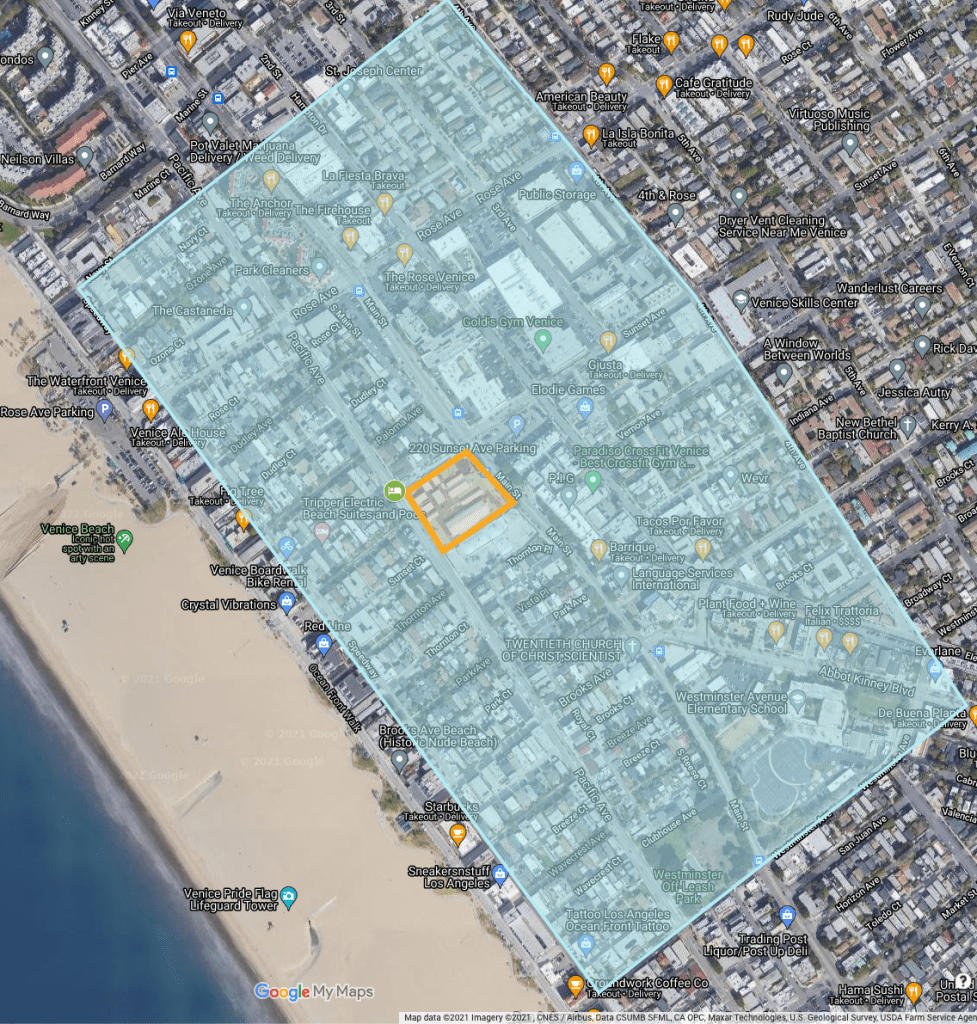
Many residents of Venice and neighbors of the home have expressed great frustration with the outcome of the City’s efforts to house the homeless in their back yards. Questions like “What happened to Mr. Bonin’s promises of frequent cleaning, enforcement against tents, and extra security detail” and comments like “the Venice Boardwalk are [sic] infested with homeless encampments” are not uncommon. Because of COVID and the City’s budget cuts, sanitation services were curtailed throughout Los Angeles. Contrary to these reductions in service, the City continued an elevated cleanup effort in the cleaning zone, visiting the area nearly every day of the week. The area receives spot cleanings on Monday and Wednesday, larger cleanings on Thursday, and additional services on Friday. There is also (outside of the Bridge Home zone but on the street nearby) additional special Sanitation service to the Venice Beach Boardwalk on Fridays. The entire rest of the district has only one day of sanitation service each week focused on encampments.
Indeed, the promises were fulfilled for the Bridge Home proposal.
These encampments are “Havens for the Criminals”
First, please stop misusing the term encampment. Homeless encampments are locations where one or more homeless people live in an unsheltered area. They are uncontrolled organically growing collections of homeless people. Exactly not what the Bridge Home is.
Another overwhelming concern is about the safety of the residents, businesses and tourists visiting Venice. This is another subject with extreme views and where misinformation has spread far and wide; take these choice words emailed to the members of the Neighborhood Council: “skyrocketing crime around the sites, with more broken promises of increased patrol and security” and “crime is escalating because the encampments are now Havens for the Criminals“. I am not sure skyrocketing has been defined in a measurable way but I AM certain that the encampments are not “Havens for the Criminals”.
While crime rates for assault and other misdemeanors have increased in Venice in the areas surrounding the bridge home, they have not skyrocketed. While any assaults are not to be tolerated, they are perpetrated by those living outside the home. The City is tracking the number of crimes reported at the home property and there are very few. This is another example of why the bridge home is an important part of the solution. It provides on site security and a sense of safety to the occupants.
Finally, many have said that the bridge home has increased the number and size of encampments in the areas surrounding the home. The fact is that there were already sizable encampments on both Hampton and Third streets prior to the introduction of the home. There is a new encampment on a section of Sunset Avenue immediately in front of the home. This is because the catchment area for the home, which is all of Venice, has far more people living without housing than the home could possibly house.
Given all that the home has accomplished in its 16 months of operation, I would say it’s a great success and a program that should be extended throughout Los Angeles. Is it without some issues, absolutely not, but it’s at capacity, serving those in need and keeping over 100 adults and youth housed at night and out of your yards and streets.
 Exploring Westchester / Playa Neighborhoods with Data